There May Still Be Time Left (2022) and Moves from the Archive (2023) are two artists’ books presenting selected images from Aaron Turner’s decade-long series Black Alchemy. Hovering at the intersection of race and representation, Black Alchemy is an investigation into the multidimensional world of Black American history—and, by extension, Black American identity and subjectivity.
Using portraits of well-known historical Black figures as well as vernacular photographs of his own familial relations and unknowns, Turner succeeds in his project of representing the plurality of Black American life. He photographs and (re)photographs archival photographic material, arranging it into new narratives in his two books, which both in their own ways illuminate the parallel processes of constructing images and stories of selfhood. Turner pulls from history, both public and private, to illustrate the complex relationship between the making of photographs and the construction of self.
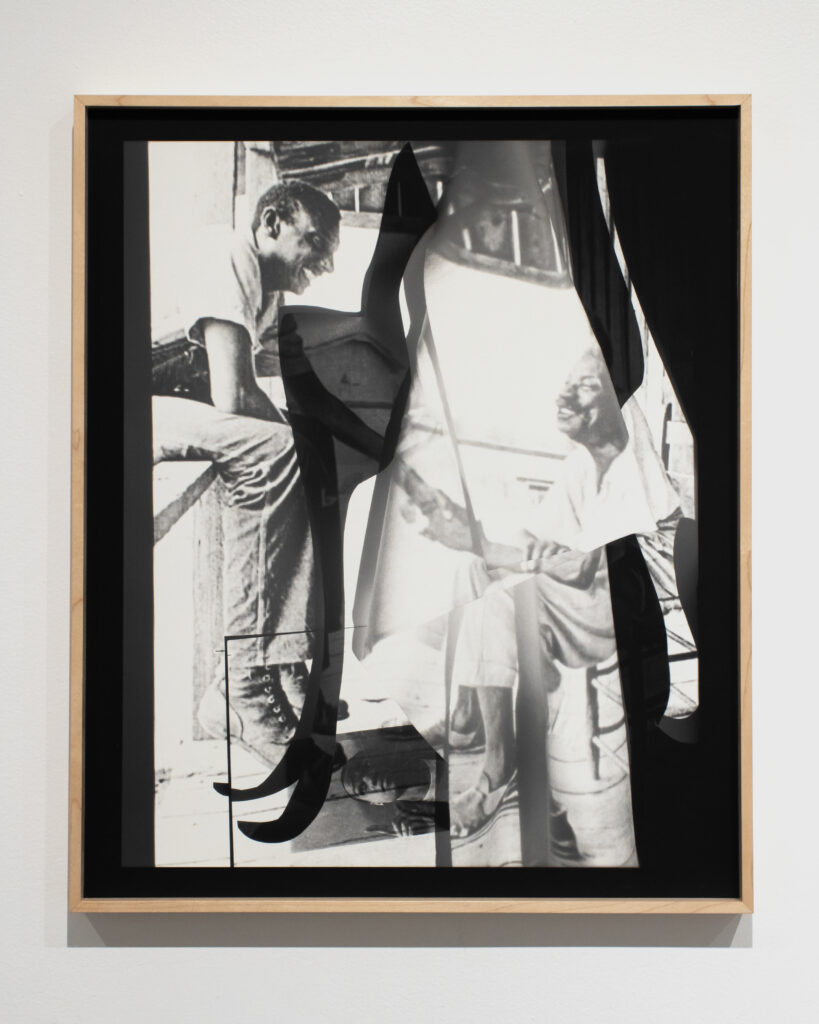
2020, 20in x 24in, Gelatin Silver Print
© Aaron Turner, Installation view:
BLACK ALCHEMY: RESOLVE (ATTEMPT #1) July 6th, 2023 -
September 30th, 2023 @ The Penumbra Foundation
Image Credit: © The Penumbra Foundation
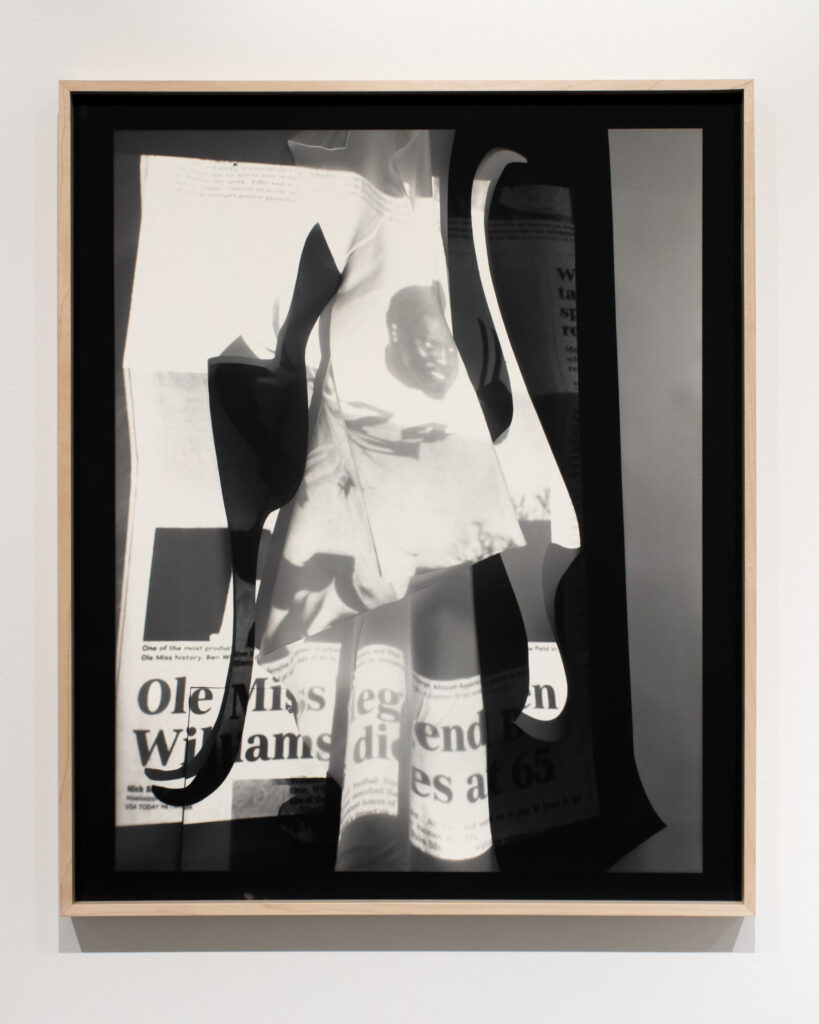
2020, 20in x 24in, Gelatin Silver Print
© Aaron Turner, Installation view:
BLACK ALCHEMY: RESOLVE (ATTEMPT #1) July 6th, 2023 -
September 30th, 2023 @ The Penumbra Foundation
Image Credit: © The Penumbra Foundation
Tina Campt, in her book Image Matters (2012), elaborates on photography’s role in the construction of what she calls “subjects in becoming.” She asks what the practice of making images did for Black sitters specifically—what it allowed them to do and say about themselves. “These images,” Campt writes, “enunciate forms of identification and subjectivity, that perhaps, at the time, had yet to be articulated.” Turner, with his abstracted photographs woven together into powerful sequences, hints at something similar.
In his essay “Frederick Douglass’s Camera Obscura,” Henry Louis Gates Jr. highlights how Douglass, the most photographed man in the nineteenth century, used photography (self-portraiture, specifically) to insist on “individual black specificity” and to illustrate “the variation in forms of black subjectivity.” Douglass himself, in his famous essay “Pictures and Progress,” explains that his motivation for embracing photography was to reject the racist stereotypes of the “debased, subhuman Negro” by replacing those images in the public imaginary with a “proliferation of anticaricatures.” Turner, in the books of his Black Alchemy series, also offers the public imagination a series of “anticaricatures” based on the same images meant to defy these stereotypes two centuries prior.
Turner’s use of lighting, editing, composition, and geometric abstraction create a disorientation that forces the viewer to interact with Black American history differently. Alchemy is a branch of natural philosophy based on the supposed transformation of matter, through science or magic. But Turner’s Black Alchemy is an application of the transformative power of photography onto the dominant narrative of Black American history. His process of (re)photographing iconic historical images in distorted shapes suggests a transfiguration of the common underlying narratives that we’re usually fed—narratives sanitized for white American audiences.
In Moves from the Archive, there is one image in particular that highlights this recontextualization of the historical archive: Untitled (Augmented Legacy), 2021, a distorted photograph of Fredrick Douglass superimposed onto a large white sheet that covers unknown objects. The image entices the viewer, who might wonder what is being covered up. Fluid Black subjectivity is conjured into being through light, shadow, distortion, reflection, refraction, projection—photographic magic that alchemizes the viewer’s perception. The two books that emerged from this project are curated love letters to Turner’s personal practice of alchemizing Blackness.
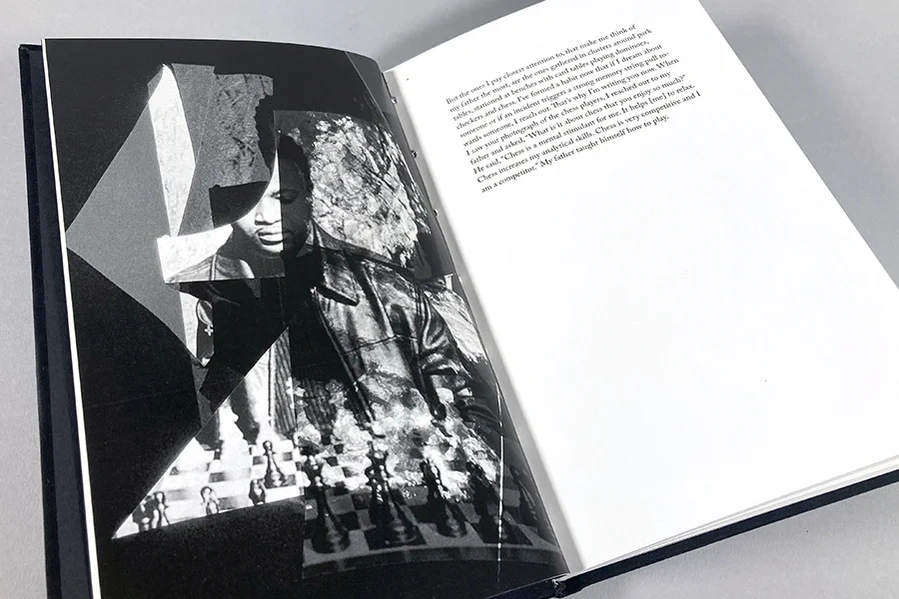
VSW (Visual Studies Workshop) Press, 2022.
5.5 x 9 in (23.6 x 14.8 cm), 64 pages. Edition of 250.
Hardbound in velour, digital offset. ISBN 0898222028
There May Still Be Time Left is a beautiful hardbound book with a black velvet cover and silver engravings. Filled with images and text, it emphasizes interaction and conversation with fellow Black artist Daonne Huff, who enters the book through a personal letter to Turner. Moves from the Archive, on the other hand, is a soft and floppy book whose exposed spine means that on a shelf, all one might see is the glue and thread keeping the book together. Its title is letterpressed on the back cover in unaligned font, making it appear wavy and watery, the letters not quite fixed to the page. There May Still Be Time Left and Moves from the Archive cannot help but enrich each other when in conversation.
Daonne Huff’s original epistolary essay in There May Still Be Time Left questions historical terrain that was overlooked, handpicked, and altered for the whitewashed American history textbooks. Huff wrestles with the difficult topics that arise from this area of inquiry; Turner takes these words in turn and practices his Black alchemy on them by printing and sectioning words on the same white glossy photo paper of his prints.
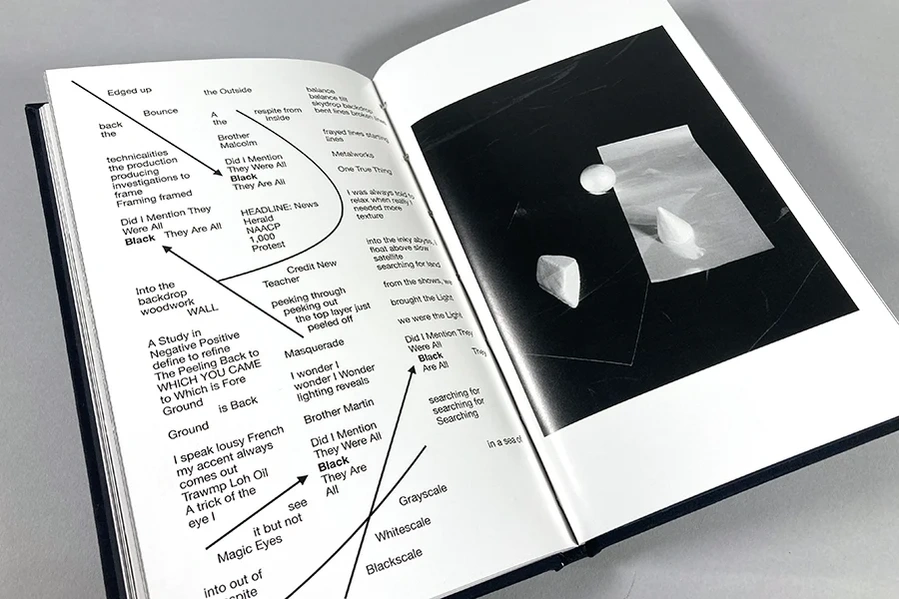
Huff’s essay begins with internal thoughts about the Spanish word claro, which translates into “light,” “of course,” or “clear” in English. The three sections of her letter are labeled as such, with each section handling a distinct aspect of the Black experience.
“Light,” “Of Course,” and “Clear” detail the presence and visibility of Black Americans, the outright act of defiance this presence holds, and the clarity that comes from continuing to make the deliberate choice to be visible. The selected images that divide Huff’s letter lend themselves to the alchemy of the book by transforming the letter into something new. The book’s ending contains poetry that mirrors this practice through a whirlwind of print and reassemblage of verses, taking the reader through a chaotic flow of thought surrounding Black identity and Black presence. A forceful fusion of writing and photography, There May Still Be Time Left is Black Alchemy in a new medium, the artists’ book.
In comparison, Moves from the Archive might perhaps be initially mistaken for an exhibition catalogue, with its series of images on plain white backgrounds and small titles. Its inventiveness (open-spine binding, trifold covers, unusual composition of images on the page) pushes back on this first impression, however.
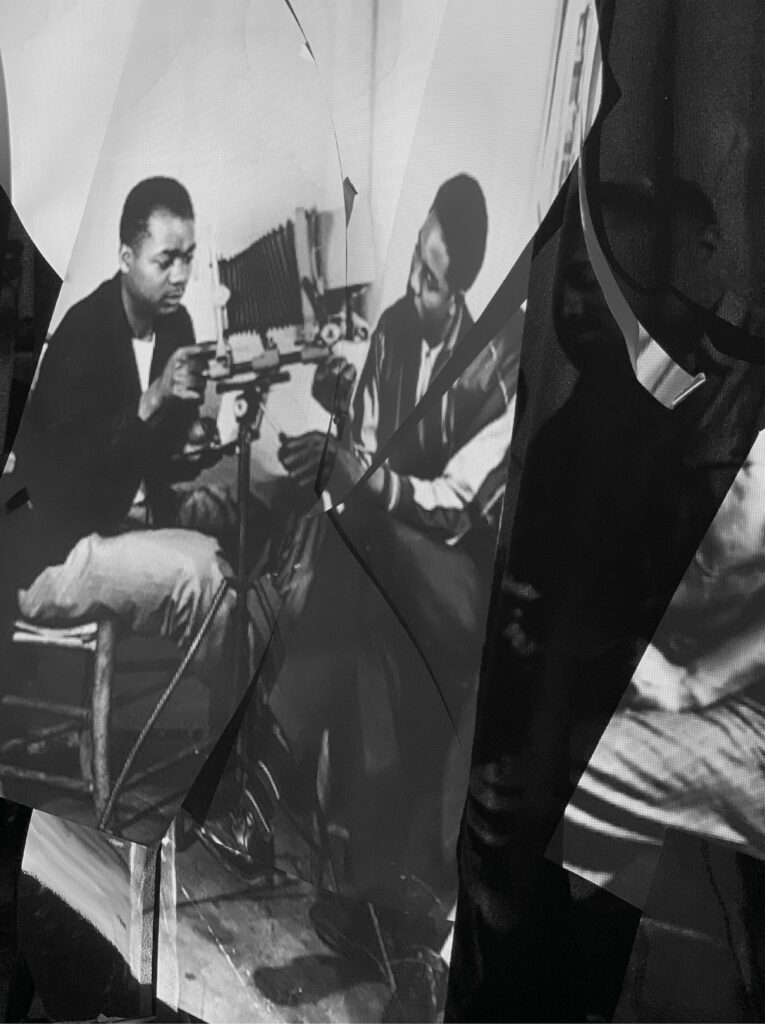
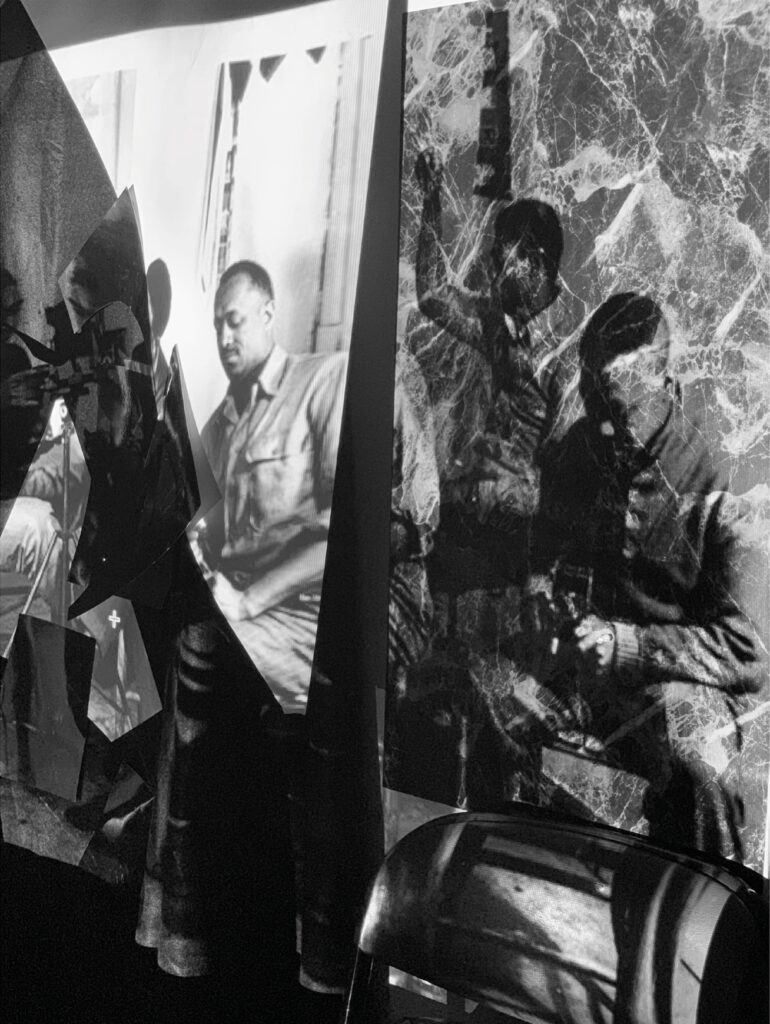
The front cover consists of a trifold double-sided print with two die-cut shapes that resemble many of the shapes found in Turner’s photographs. The die cuts add a layer to Turner’s signature geometric abstraction while also opening up the unexpected and unsettling the perceived rules of engagement with the book. The open-spine binding exposes the stitching that is holding the entire object together, placing hidden labor (intrinsically synonymous with Black American labor) at the forefront of the book.
Moves from the Archive’s strongest asset is its composition of images, a skillful use of negative space imitating the very photographs in its curation. Spreads that include only one singular image sized down to leave a plane of empty space are striking. For example, the images Black Posture (688th Central Postal Directory Battalion), 2018 and Seen #2, 2018 float on a sparse and open page. With each spread, the book presents small glimpses of Black presence—not allowed in American history, but now allowed to be the singular voice in the vast whiteness of the page. The small captions for each image interrupt this negative space, making one wish for more text to further recontextualize the work. One is granted that writing at the end of the book, with the back trifold cover containing an essay by Terence Washington, “Making Light, Making Futures,” which points toward Turner’s paving of potential futures with alchemized archival history.
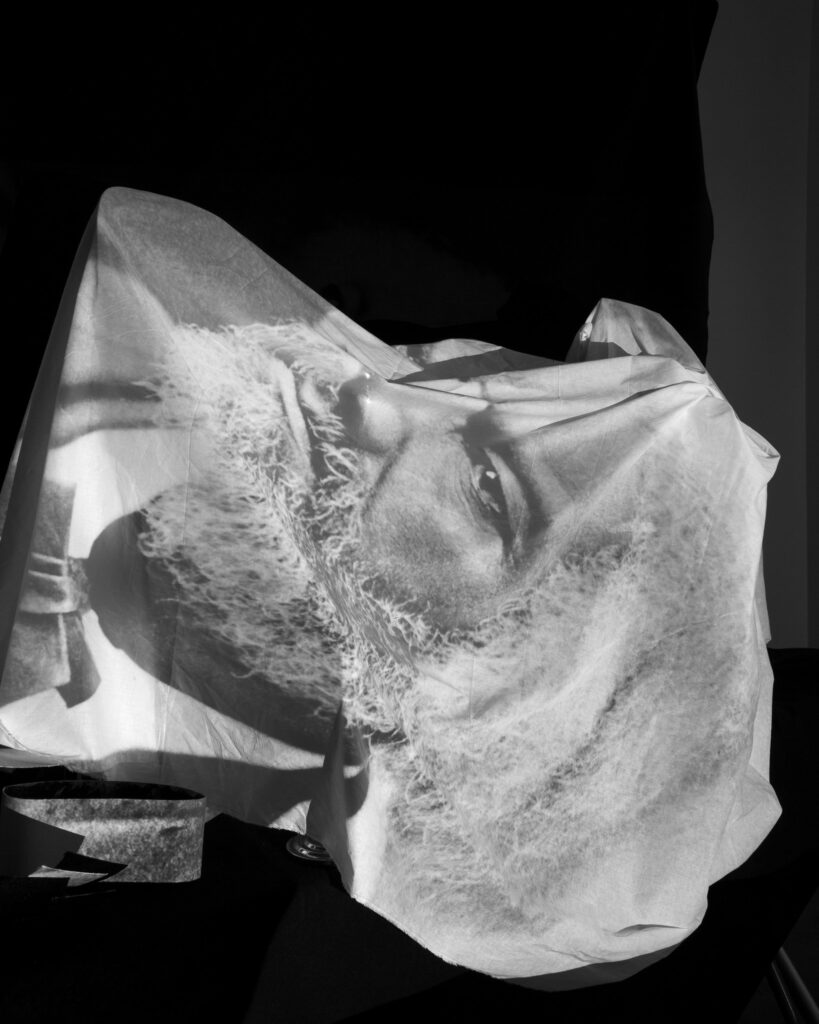
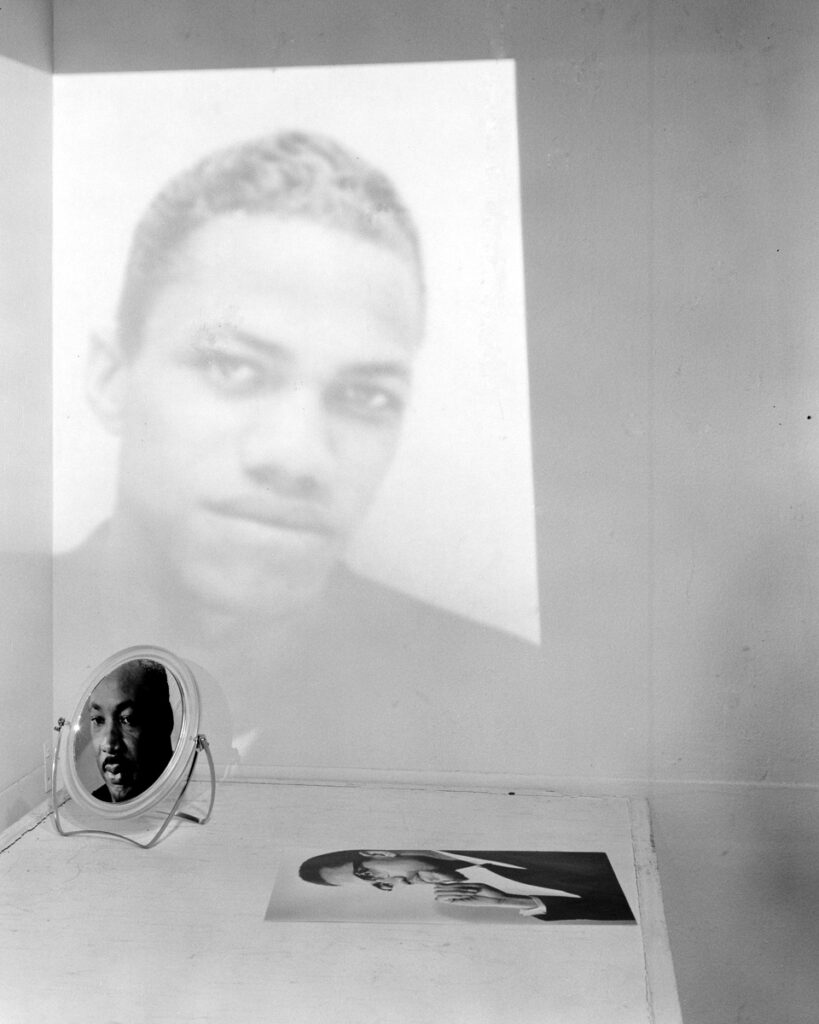
Moves From The Archive © Aaron Turner
Like the life’s work of Douglass (who frequently appears in Black Alchemy), Turner’s work inherently challenges the narrow but common singular view of Black history based on the myth of the model minority. This myth persists to this day and continues to cause discord among minority populations, where the placid and traditionally educated (read “white-educated”) individual is seen as more worthy or successful, despite the stereotypes of their racial background that should hinder them. The tension between the placid model minority and the not-so-placid is perpetually played out in the common presence of two individuals: Martin Luther King Jr. (“the peaceful advocate”) and Malcolm X (“the violent political renegade”). In Black Alchemy, however, Turner transforms the narrative by placing the two side by side under the same gaze.
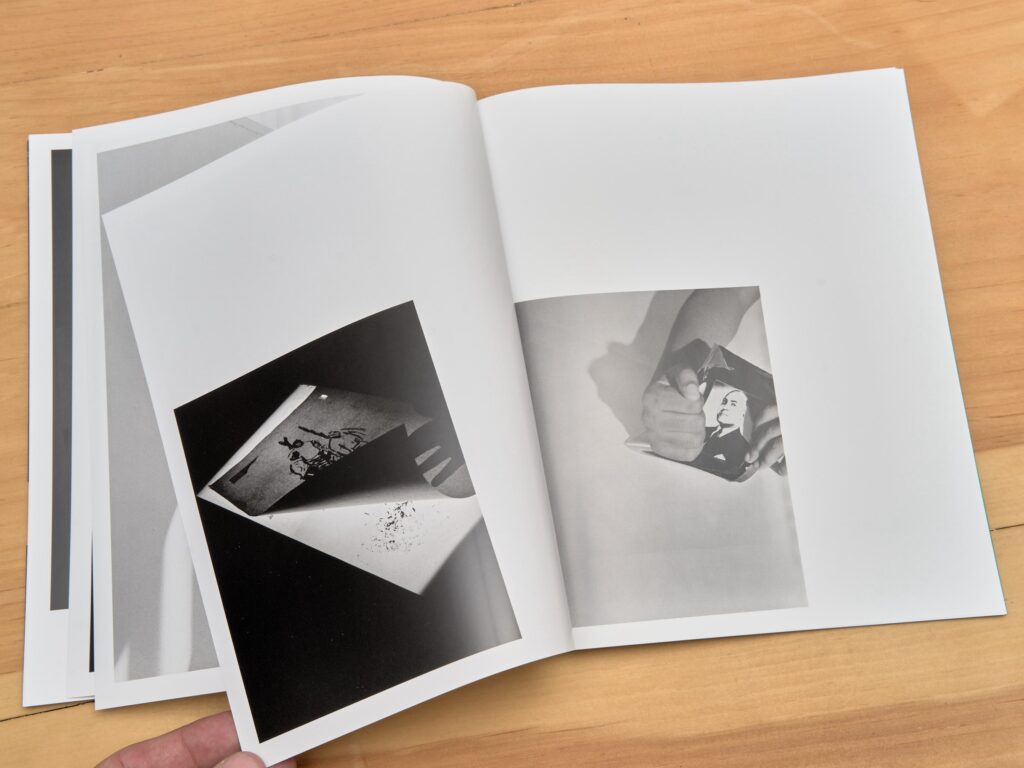
Sleeper Studio, 2023. Edition of 500.
10 x 8 in (25.4 x 20.32 cm), 86 pages, 57 plates.
Open spine binding, hardcover, tri-folded and die cut
ISBN: 979-8-88862-304-6. Photos Courtesy Sleeper Studio.
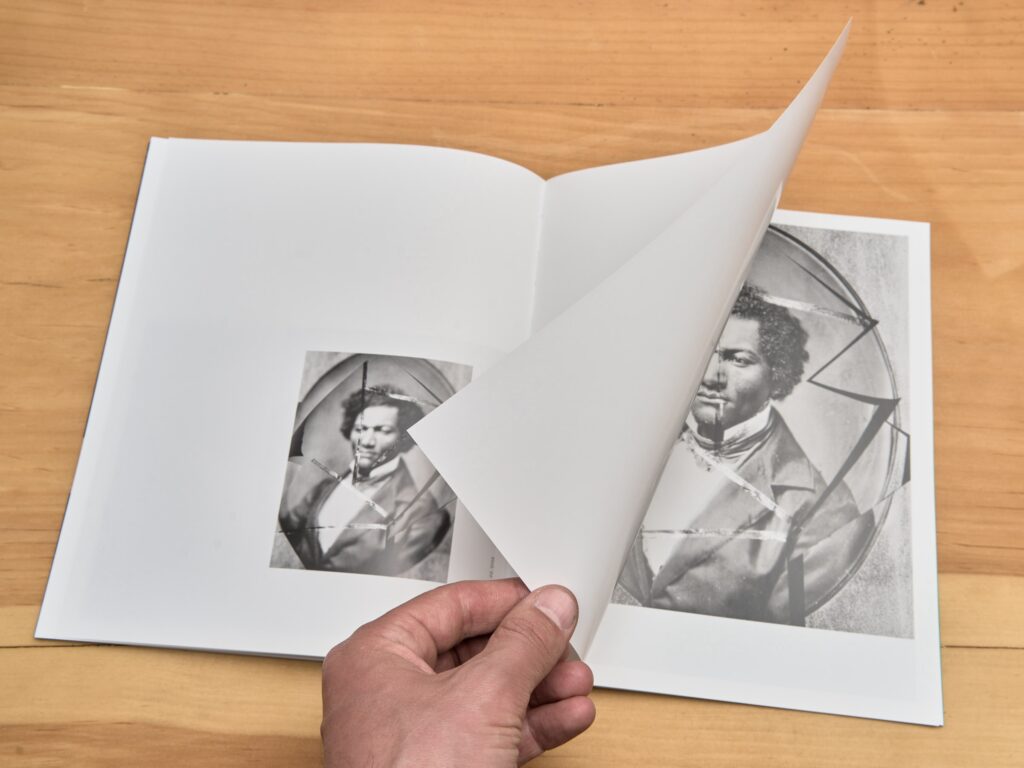
Ultimately, There May Still Be Time Left and Moves from the Archive are thoughtful and valuable studies on differing presentations of Black American history, a topic that’s become ever more prevalent in today’s conversations, with the recent attacks on critical race theory and the sanitization of American history in more conservative states. Each book, with its own distinct language, builds on and expands Turner’s lifelong endeavor of transforming and abstracting image, text, and history: There May Still Be Time Left, a tracing of a conversation, and Moves from the Archive, an alchemical incantation through image, sequence, and design.
2020, 20in x 24in, Gelatin Silver Print
© Aaron Turner, Installation view:
BLACK ALCHEMY: RESOLVE (ATTEMPT #1) July 6th, 2023 -
September 30th, 2023 @ The Penumbra Foundation
Image Credit: © The Penumbra Foundation
2020, 20in x 24in, Gelatin Silver Print
© Aaron Turner, Installation view:
BLACK ALCHEMY: RESOLVE (ATTEMPT #1) July 6th, 2023 -
September 30th, 2023 @ The Penumbra Foundation
Image Credit: © The Penumbra Foundation
VSW (Visual Studies Workshop) Press, 2022.
5.5 x 9 in (23.6 x 14.8 cm), 64 pages. Edition of 250.
Hardbound in velour, digital offset. ISBN 0898222028
Moves From The Archive © Aaron Turner
Sleeper Studio, 2023. Edition of 500.
10 x 8 in (25.4 x 20.32 cm), 86 pages, 57 plates.
Open spine binding, hardcover, tri-folded and die cut
ISBN: 979-8-88862-304-6. Photos Courtesy Sleeper Studio.